
 English
-
English
-
 Español
-
 Português
-
 Русский
-
 Français
-
 日本語
日本語
-
 Deutsch
-
 Tiếng Việt
-
 Italiano
-
 Nederlands
-
 ไทย
ไทย
-
 Polski
-
 한국어
한국어
-
 Svenska
-
 Magyar
-
 Bahasa Melayu
-
 বাংলা
বাংলা
-
 Dansk
Dansk
-
 Suomi
Suomi
-
 हिन्दी
-
 Filipino
-
 Türkçe
-
 Gaeilge
-
 العربية
-
 Bahasa Indonesia
-
 Norsk
Norsk
-
 اردو
اردو
-
 Čeština
-
 Ελληνικά
-
 Українська
-
 Basa Jawa
-
 فارسی
فارسی
-
 தமிழ்
தமிழ்
-
 తెలుగు
-
 नेपाली
-
 မြန်မာ
-
 Български
-
 ລາວ
ລາວ
-
 Latina
-
 Қазақша
-
 Euskera
-
 Azərbaycan
-
 Slovenčina
-
 Македонски
-
 Lietuvių
-
 Eesti
Eesti
-
 Română
-
 Slovenščina

Advantages of Steel Structure Office Buildings
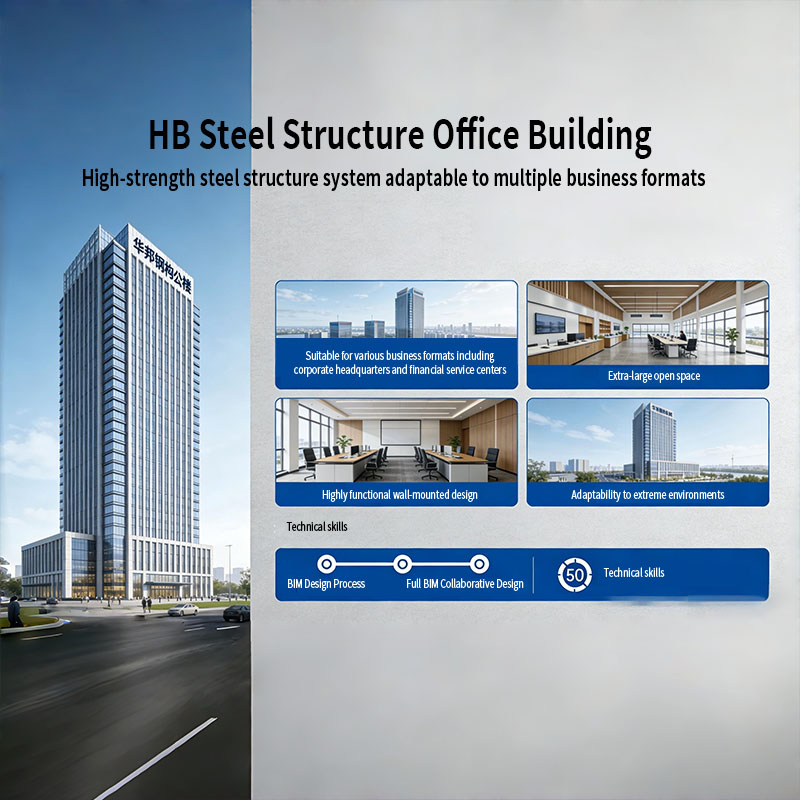
With the continuous upgrading of global office architecture, modern enterprises are placing higher demands on construction speed, structural safety, space utilization, overall building cost, and post-completion flexibility. Compared with traditional reinforced concrete structures, steel structure office building s—thanks to the inherent advantages of steel materials and structural systems—have gradually become the mainstream solution for industrial parks, corporate headquarters, and commercial office developments worldwide.
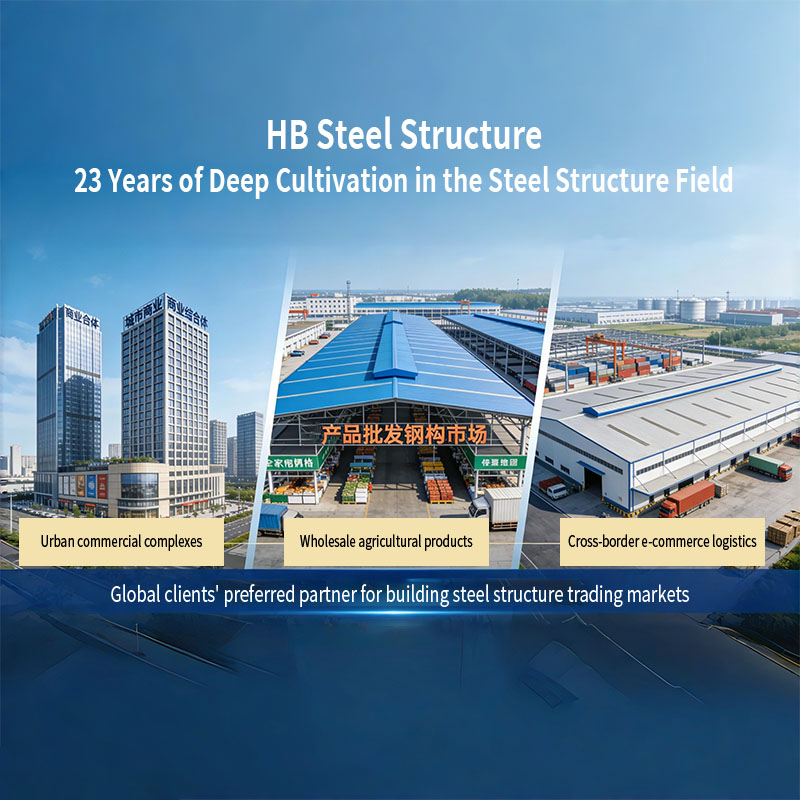
HB Steel Structure Engineering Co., Ltd., with 23 years of experience in steel structure manufacturing and construction, has successfully delivered over a hundred engineering projects. Based on extensive on-site engineering practice, this article provides a comprehensive analysis of the key advantages of steel structure office building s, helping investors and developers better understand their overall value.
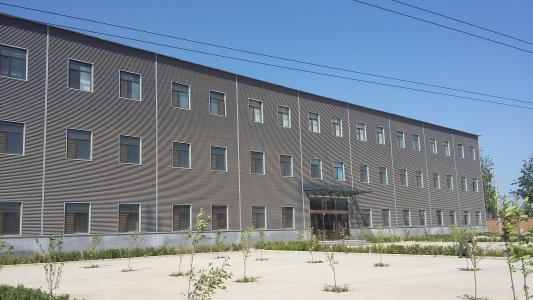
1. Superior Seismic Performance and Reduced Earthquake Damage
Steel structure office building s are lightweight yet highly strong, offering excellent seismic resistance. Steel materials have outstanding ductility and toughness, allowing them to absorb large amounts of energy through deformation under seismic loads, thereby avoiding brittle failure.
Extensive earthquake damage investigations have shown that, in major earthquakes worldwide, multi-story steel structures experience significantly lower collapse rates and severe damage compared to reinforced concrete buildings. Even when damage occurs, steel structures are easier to repair or reconfigure, enabling faster post-disaster recovery and ensuring the continuity of personnel safety and asset value.
2. High Structural Reliability and Strong Design Consistency
Steel materials are produced under strict quality control, ensuring uniform composition and stable mechanical performance. As an approximately isotropic material, steel closely matches the assumptions used in engineering mechanics.
As a result, the actual performance of steel structures aligns closely with theoretical calculations, providing high design reliability and a solid structural safety foundation for office buildings.
3. Lightweight Structure and Lower Foundation Cost
Although steel has a relatively high density, its strength-to-weight ratio is significantly superior to that of concrete. Under the same load conditions, steel components require smaller cross-sections, greatly reducing the overall building weight.
This reduces transportation and installation difficulty while lowering foundation loads. Consequently, foundation and substructure costs are significantly reduced, making steel structures especially suitable for soft soil conditions and urban redevelopment projects.
4. Excellent Ductility and Safety Redundancy
Steel exhibits excellent ductility. Under overload or accidental loading conditions, steel structures typically undergo noticeable plastic deformation before failure rather than sudden collapse.
This “deformation-before-failure” behavior allows early detection of structural issues and timely corrective actions, effectively preventing major accidents. In addition, steel structures perform exceptionally well under dynamic loads, offering superior energy absorption capacity and enhanced resistance to seismic and impact forces.
5. Efficient Fabrication and Short Construction Period
Steel structural components are manufactured in specialized factories, enabling high levels of mechanization and automation. This ensures high precision, stable quality, and strong industrialization capability.
After fabrication, components are transported to the construction site for assembly using bolted or welded connections. Large modules can even be pre-assembled on the ground and then lifted into place.
Compared with reinforced concrete structures, steel structures significantly shorten construction time, enabling earlier project operation and faster return on investment. In addition, their flexible connection systems allow for future reinforcement, renovation, or even dismantling, providing superior lifecycle adaptability.
6. Excellent Sealing Performance and Wide Functional Applications
Steel structures often use welded connections, forming tight, continuous joints with excellent air and water tightness. This makes them suitable for environments requiring strict humidity, dust, and sealing control, such as data centers, precision equipment rooms, and controlled industrial spaces.
The continuity of welded joints ensures fewer leakage risks compared to construction joints in concrete structures. This characteristic significantly expands the application range of steel structure office building s and supports complex functional requirements.
7. Controllable Corrosion Resistance and Reasonable Maintenance Costs
Although steel is more susceptible to corrosion than concrete, this issue can be effectively controlled in normal office environments. After proper surface treatment and anti-corrosion coating, corrosion risk is significantly reduced.
Routine maintenance mainly involves periodic inspection and repainting of protective coatings, keeping maintenance costs within an acceptable range. In practical engineering applications, steel structures are sometimes combined with concrete systems; however, fully steel structural solutions are increasingly adopted in new projects.
Steel Structure Office Building s — A Rational Choice for Safety, Economy, and Efficiency
In summary, steel structure office building s offer outstanding seismic resistance, high structural reliability, lightweight construction, fast installation, flexible space design, and strong adaptability. These advantages make them superior to traditional concrete structures in many aspects and highly aligned with modern commercial development needs.
With the global adoption of prefabricated construction and green building concepts, steel structure office building s are expected to become a mainstream trend in the commercial construction sector.
Leveraging 23 years of technical expertise and extensive multi-sector project experience, HB Steel Structure Engineering Co., Ltd. provides integrated steel structure building solutions—from conceptual design and component manufacturing to on-site installation. The company is committed to delivering high-quality, cost-efficient, and long-life-cycle modern office building solutions for clients worldwide.
HB Steel Structure Engineering Co., Ltd., with 23 years of experience in steel structure manufacturing and construction, has successfully delivered over a hundred engineering projects. Based on extensive on-site engineering practice, this article provides a comprehensive analysis of the key advantages of steel structure office building s, helping investors and developers better understand their overall value.
1. Superior Seismic Performance and Reduced Earthquake Damage
Steel structure office building s are lightweight yet highly strong, offering excellent seismic resistance. Steel materials have outstanding ductility and toughness, allowing them to absorb large amounts of energy through deformation under seismic loads, thereby avoiding brittle failure.
Extensive earthquake damage investigations have shown that, in major earthquakes worldwide, multi-story steel structures experience significantly lower collapse rates and severe damage compared to reinforced concrete buildings. Even when damage occurs, steel structures are easier to repair or reconfigure, enabling faster post-disaster recovery and ensuring the continuity of personnel safety and asset value.
2. High Structural Reliability and Strong Design Consistency
Steel materials are produced under strict quality control, ensuring uniform composition and stable mechanical performance. As an approximately isotropic material, steel closely matches the assumptions used in engineering mechanics.
As a result, the actual performance of steel structures aligns closely with theoretical calculations, providing high design reliability and a solid structural safety foundation for office buildings.
3. Lightweight Structure and Lower Foundation Cost
Although steel has a relatively high density, its strength-to-weight ratio is significantly superior to that of concrete. Under the same load conditions, steel components require smaller cross-sections, greatly reducing the overall building weight.
This reduces transportation and installation difficulty while lowering foundation loads. Consequently, foundation and substructure costs are significantly reduced, making steel structures especially suitable for soft soil conditions and urban redevelopment projects.
4. Excellent Ductility and Safety Redundancy
Steel exhibits excellent ductility. Under overload or accidental loading conditions, steel structures typically undergo noticeable plastic deformation before failure rather than sudden collapse.
This “deformation-before-failure” behavior allows early detection of structural issues and timely corrective actions, effectively preventing major accidents. In addition, steel structures perform exceptionally well under dynamic loads, offering superior energy absorption capacity and enhanced resistance to seismic and impact forces.
5. Efficient Fabrication and Short Construction Period
Steel structural components are manufactured in specialized factories, enabling high levels of mechanization and automation. This ensures high precision, stable quality, and strong industrialization capability.
After fabrication, components are transported to the construction site for assembly using bolted or welded connections. Large modules can even be pre-assembled on the ground and then lifted into place.
Compared with reinforced concrete structures, steel structures significantly shorten construction time, enabling earlier project operation and faster return on investment. In addition, their flexible connection systems allow for future reinforcement, renovation, or even dismantling, providing superior lifecycle adaptability.
6. Excellent Sealing Performance and Wide Functional Applications
Steel structures often use welded connections, forming tight, continuous joints with excellent air and water tightness. This makes them suitable for environments requiring strict humidity, dust, and sealing control, such as data centers, precision equipment rooms, and controlled industrial spaces.
The continuity of welded joints ensures fewer leakage risks compared to construction joints in concrete structures. This characteristic significantly expands the application range of steel structure office building s and supports complex functional requirements.
7. Controllable Corrosion Resistance and Reasonable Maintenance Costs
Although steel is more susceptible to corrosion than concrete, this issue can be effectively controlled in normal office environments. After proper surface treatment and anti-corrosion coating, corrosion risk is significantly reduced.
Routine maintenance mainly involves periodic inspection and repainting of protective coatings, keeping maintenance costs within an acceptable range. In practical engineering applications, steel structures are sometimes combined with concrete systems; however, fully steel structural solutions are increasingly adopted in new projects.
Steel Structure Office Building s — A Rational Choice for Safety, Economy, and Efficiency
In summary, steel structure office building s offer outstanding seismic resistance, high structural reliability, lightweight construction, fast installation, flexible space design, and strong adaptability. These advantages make them superior to traditional concrete structures in many aspects and highly aligned with modern commercial development needs.
With the global adoption of prefabricated construction and green building concepts, steel structure office building s are expected to become a mainstream trend in the commercial construction sector.
Leveraging 23 years of technical expertise and extensive multi-sector project experience, HB Steel Structure Engineering Co., Ltd. provides integrated steel structure building solutions—from conceptual design and component manufacturing to on-site installation. The company is committed to delivering high-quality, cost-efficient, and long-life-cycle modern office building solutions for clients worldwide.
Related News
- Building a Strong Foundation for Steel Structure Manufacturing Plant Development
- Steel Structure Concert Hall: Long-Term Construction Advantages for Premium Performing Arts Venues
- Waterproof System for Steel Structure Buildings: Building a Durable Defense Against Water Damage
- Steel Structure Factory Building Column Base Design: Building a Strong Foundation for Industrial Structures
- Steel Structure Office Building: An Adaptable Solution for Modern Commercial Architecture
- Four Core Systems That Drive the Industrialization of Steel Structure Residential Buildings
Leave me a message