
 Lietuvių
-
 English
-
 Español
-
 Português
-
 Русский
-
 Français
-
 日本語
日本語
-
 Deutsch
-
 Tiếng Việt
-
 Italiano
-
 Nederlands
-
 ไทย
ไทย
-
 Polski
-
 한국어
한국어
-
 Svenska
-
 Magyar
-
 Bahasa Melayu
-
 বাংলা
বাংলা
-
 Dansk
Dansk
-
 Suomi
Suomi
-
 हिन्दी
-
 Filipino
-
 Türkçe
-
 Gaeilge
-
 العربية
-
 Bahasa Indonesia
-
 Norsk
Norsk
-
 اردو
اردو
-
 Čeština
-
 Ελληνικά
-
 Українська
-
 Basa Jawa
-
 فارسی
فارسی
-
 தமிழ்
தமிழ்
-
 తెలుగు
-
 नेपाली
-
 မြန်မာ
-
 Български
-
 ລາວ
ລາວ
-
 Latina
-
 Қазақша
-
 Euskera
-
 Azərbaycan
-
 Slovenčina
-
 Македонски
-
Lietuvių
-
 Eesti
Eesti
-
 Română
-
 Slovenščina

Complete Steel Structure Factory Production Process Explained
In today's industrial construction sector, steel structure factories have become the preferred building solution for manufacturing workshops, logistics warehouses, and large-scale processing facilities worldwide. Thanks to their short construction cycles, long-span capabilities, flexible interior layouts, and convenient expansion potential, steel buildings offer significant advantages over conventional construction methods.
The overall quality, structural stability, and service life of a Steel Structure Factory Building largely depend on standardized and precision-controlled manufacturing processes. Therefore, strict adherence to a complete and regulated production workflow is essential for delivering high-quality steel structure buildings.
HB Steel Structure Engineering Co.,Ltd. specializes in the design and fabrication of industrial steel structures, with over 23 years of experience in factory buildings, warehouses, and industrial facilities. Throughout its development, the company has remained committed to serving client needs, supporting project success, and driving business growth. By establishing comprehensive management systems, maintaining strict quality control standards, and leveraging advanced manufacturing technologies, HB Steel Structure Engineering Co.,Ltd. provides integrated solutions ranging from design and component fabrication to final delivery. This article provides a detailed overview of the standardized production process behind steel structure factory buildings.
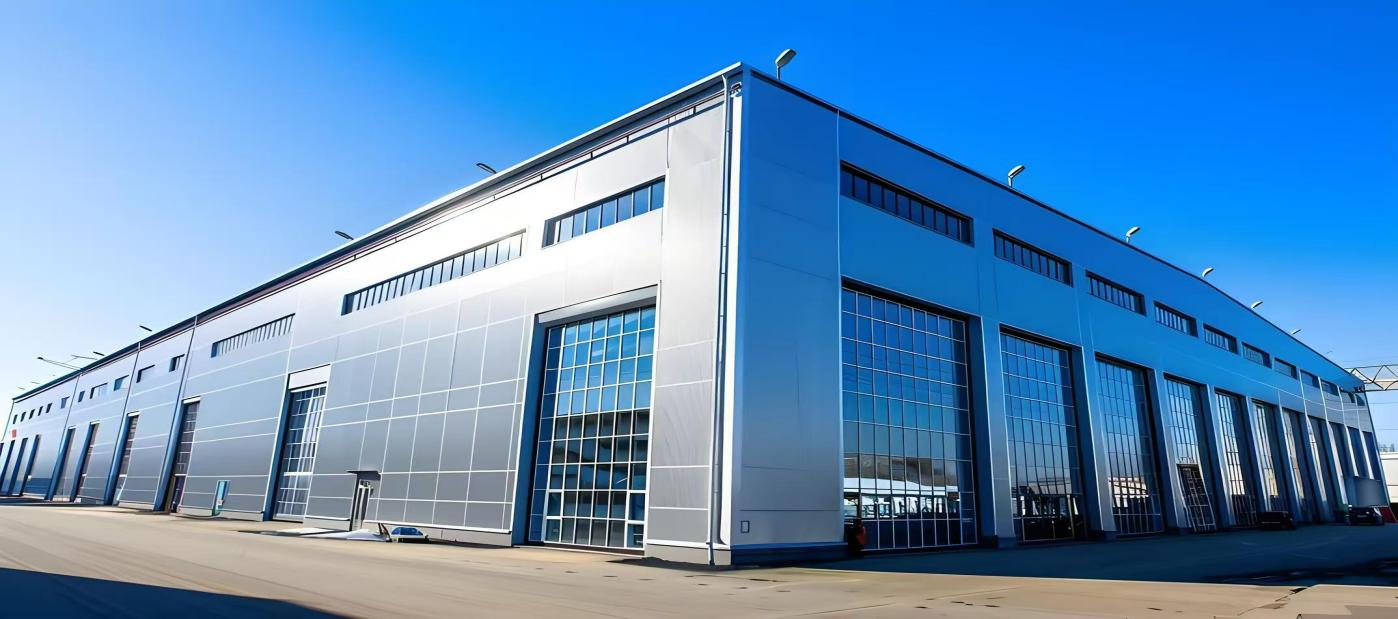
1. Detailed Engineering Design and Production Preparation
Every Steel Structure Factory Building project begins with detailed engineering design.
Based on the original architectural drawings and structural calculations, engineers utilize professional steel structure design software to create a comprehensive 3D digital model. Within this model, all structural components-including steel columns, beams, bracing systems, and connection elements-are accurately divided and detailed.
The design team then generates fabrication drawings and CNC processing data compatible with automated production equipment. This stage plays a critical role in ensuring manufacturing accuracy, optimizing production efficiency, and improving on-site installation performance, directly impacting project quality and construction schedules.
2. Material Inspection and Precision Cutting
All steel materials used in the project undergo rigorous inspection upon arrival at the manufacturing facility.
Chemical composition and mechanical property tests are conducted according to applicable international standards to ensure material compliance. After approval, the materials enter the cutting stage.
Using CNC flame cutting machines or plasma cutting equipment, steel plates and profiles are cut into specified dimensions and shapes. Throughout the process, dimensional tolerances are strictly controlled within ±2 mm to establish a solid foundation for subsequent fabrication operations.
3. Assembly and Welding of Structural Components
After cutting, web plates and flange plates are accurately positioned using automatic assembly machines.
Submerged Arc Welding (SAW) technology is then employed to create continuous welds, forming H-beams and other structural sections. For highly stressed beam-column connections and critical butt welds, non-destructive testing (NDT) is performed in accordance with industry standards.
The weld quality must meet Grade I or Grade II requirements to ensure sufficient load-bearing capacity and seismic performance.
4. Straightening, Correction, and CNC Drilling
Heat generated during welding may cause deformation of steel members.
To restore dimensional accuracy, specialized H-beam straightening machines are used to correct distortions and return components to their designed geometry. Once straightening is completed, CNC drilling machines process bolt holes with high precision.
As critical connection points for site assembly, bolt hole positioning tolerances are typically controlled within ±1 mm to ensure efficient erection and seamless component fit-up during installation.
5. Surface Treatment and Anti-Corrosion Protection
To enhance durability under various environmental conditions, all steel components undergo standardized surface treatment procedures.
Steel members first pass through a shot blasting process to achieve a surface cleanliness level of Sa 2.5. Following surface preparation, multiple protective coatings are applied, including:
Zinc-rich epoxy primer
Intermediate protective coating
Weather-resistant topcoat
This multi-layer coating system significantly improves corrosion resistance and service life.
For projects located in coastal regions, chemical plants, or other highly corrosive environments, additional protection methods such as hot-dip galvanizing or thermal metal spraying can be incorporated to further enhance long-term durability.
6. Trial Assembly, Inspection, and Shipment
Before delivery, large structural assemblies such as roof trusses, primary girders, and bracing systems undergo trial assembly within the factory.
During this process, technicians verify:
Bolt hole alignment
Joint fit-up accuracy
Structural dimensions
Overall assembly compatibility
Any deviations are corrected before shipment, minimizing potential installation challenges on-site.
After passing comprehensive quality inspections covering dimensions, weld quality, coating thickness, and assembly accuracy, all components are labeled, packaged, and organized according to the construction schedule before being transported to the project site.
Standardized Manufacturing Drives Industrial Construction Excellence
From digital engineering design and material inspection to automated fabrication, corrosion protection, and pre-assembly verification, every stage of the steel structure manufacturing process is interconnected. Together, these procedures form a complete production system that ensures the quality and reliability of modern industrial buildings.
HB Steel Structure Engineering Co.,Ltd. adheres to stringent manufacturing standards throughout every production stage, balancing safety, cost-efficiency, and long-term durability. By providing customized Steel Structure Factory Building solutions for manufacturers, logistics operators, and industrial developers worldwide, the company helps clients reduce construction costs, shorten project timelines, and build high-performance industrial facilities for the future.
The overall quality, structural stability, and service life of a Steel Structure Factory Building largely depend on standardized and precision-controlled manufacturing processes. Therefore, strict adherence to a complete and regulated production workflow is essential for delivering high-quality steel structure buildings.
HB Steel Structure Engineering Co.,Ltd. specializes in the design and fabrication of industrial steel structures, with over 23 years of experience in factory buildings, warehouses, and industrial facilities. Throughout its development, the company has remained committed to serving client needs, supporting project success, and driving business growth. By establishing comprehensive management systems, maintaining strict quality control standards, and leveraging advanced manufacturing technologies, HB Steel Structure Engineering Co.,Ltd. provides integrated solutions ranging from design and component fabrication to final delivery. This article provides a detailed overview of the standardized production process behind steel structure factory buildings.
1. Detailed Engineering Design and Production Preparation
Every Steel Structure Factory Building project begins with detailed engineering design.
Based on the original architectural drawings and structural calculations, engineers utilize professional steel structure design software to create a comprehensive 3D digital model. Within this model, all structural components-including steel columns, beams, bracing systems, and connection elements-are accurately divided and detailed.
The design team then generates fabrication drawings and CNC processing data compatible with automated production equipment. This stage plays a critical role in ensuring manufacturing accuracy, optimizing production efficiency, and improving on-site installation performance, directly impacting project quality and construction schedules.
2. Material Inspection and Precision Cutting
All steel materials used in the project undergo rigorous inspection upon arrival at the manufacturing facility.
Chemical composition and mechanical property tests are conducted according to applicable international standards to ensure material compliance. After approval, the materials enter the cutting stage.
Using CNC flame cutting machines or plasma cutting equipment, steel plates and profiles are cut into specified dimensions and shapes. Throughout the process, dimensional tolerances are strictly controlled within ±2 mm to establish a solid foundation for subsequent fabrication operations.
3. Assembly and Welding of Structural Components
After cutting, web plates and flange plates are accurately positioned using automatic assembly machines.
Submerged Arc Welding (SAW) technology is then employed to create continuous welds, forming H-beams and other structural sections. For highly stressed beam-column connections and critical butt welds, non-destructive testing (NDT) is performed in accordance with industry standards.
The weld quality must meet Grade I or Grade II requirements to ensure sufficient load-bearing capacity and seismic performance.
4. Straightening, Correction, and CNC Drilling
Heat generated during welding may cause deformation of steel members.
To restore dimensional accuracy, specialized H-beam straightening machines are used to correct distortions and return components to their designed geometry. Once straightening is completed, CNC drilling machines process bolt holes with high precision.
As critical connection points for site assembly, bolt hole positioning tolerances are typically controlled within ±1 mm to ensure efficient erection and seamless component fit-up during installation.
5. Surface Treatment and Anti-Corrosion Protection
To enhance durability under various environmental conditions, all steel components undergo standardized surface treatment procedures.
Steel members first pass through a shot blasting process to achieve a surface cleanliness level of Sa 2.5. Following surface preparation, multiple protective coatings are applied, including:
Zinc-rich epoxy primer
Intermediate protective coating
Weather-resistant topcoat
This multi-layer coating system significantly improves corrosion resistance and service life.
For projects located in coastal regions, chemical plants, or other highly corrosive environments, additional protection methods such as hot-dip galvanizing or thermal metal spraying can be incorporated to further enhance long-term durability.
6. Trial Assembly, Inspection, and Shipment
Before delivery, large structural assemblies such as roof trusses, primary girders, and bracing systems undergo trial assembly within the factory.
During this process, technicians verify:
Bolt hole alignment
Joint fit-up accuracy
Structural dimensions
Overall assembly compatibility
Any deviations are corrected before shipment, minimizing potential installation challenges on-site.
After passing comprehensive quality inspections covering dimensions, weld quality, coating thickness, and assembly accuracy, all components are labeled, packaged, and organized according to the construction schedule before being transported to the project site.
Standardized Manufacturing Drives Industrial Construction Excellence
From digital engineering design and material inspection to automated fabrication, corrosion protection, and pre-assembly verification, every stage of the steel structure manufacturing process is interconnected. Together, these procedures form a complete production system that ensures the quality and reliability of modern industrial buildings.
HB Steel Structure Engineering Co.,Ltd. adheres to stringent manufacturing standards throughout every production stage, balancing safety, cost-efficiency, and long-term durability. By providing customized Steel Structure Factory Building solutions for manufacturers, logistics operators, and industrial developers worldwide, the company helps clients reduce construction costs, shorten project timelines, and build high-performance industrial facilities for the future.
Related News
- Plieninių elementų gamybos ir kokybės kontrolės standartai
- Plieninės konstrukcijos konteinerių namai: pirmaujanti pasaulinė surenkamųjų statybų tendencija
- Stipraus plieno konstrukcijų gamybos įmonės plėtros pagrindo kūrimas
- Plieninės konstrukcijos koncertų salė: ilgalaikiai statybos pranašumai aukščiausios kokybės scenos menų salėms
- Plieninių konstrukcijų pastatų vandeniui atspari sistema: patvarios apsaugos nuo vandens pažeidimų kūrimas
- Plieninių konstrukcijų gamyklos pastato kolonų pagrindo projektavimas: tvirto pagrindo pramoninėms konstrukcijoms kūrimas
Leave me a message