
 English
-
English
-
 Español
-
 Português
-
 Русский
-
 Français
-
 日本語
日本語
-
 Deutsch
-
 Tiếng Việt
-
 Italiano
-
 Nederlands
-
 ไทย
ไทย
-
 Polski
-
 한국어
한국어
-
 Svenska
-
 Magyar
-
 Bahasa Melayu
-
 বাংলা
বাংলা
-
 Dansk
Dansk
-
 Suomi
Suomi
-
 हिन्दी
-
 Filipino
-
 Türkçe
-
 Gaeilge
-
 العربية
-
 Bahasa Indonesia
-
 Norsk
Norsk
-
 اردو
اردو
-
 Čeština
-
 Ελληνικά
-
 Українська
-
 Basa Jawa
-
 فارسی
فارسی
-
 தமிழ்
தமிழ்
-
 తెలుగు
-
 नेपाली
-
 မြန်မာ
-
 Български
-
 ລາວ
ລາວ
-
 Latina
-
 Қазақша
-
 Euskera
-
 Azərbaycan
-
 Slovenčina
-
 Македонски
-
 Lietuvių
-
 Eesti
Eesti
-
 Română
-
 Slovenščina

Common Exterior Wall Materials for Steel Structure Residential Buildings
With the global adoption of green building concepts and prefabricated construction technologies, steel structure housing has become a mainstream direction in the modernization of residential construction industries worldwide. Thanks to its key advantages — including lighter structural weight, superior seismic performance, shorter construction cycles, and environmentally friendly characteristics — steel structure housing is increasingly replacing conventional concrete residential systems.
Unlike traditional concrete construction, steel structure buildings place far higher demands on fire resistance and corrosion protection for their primary structural components. As a result, the exterior wall materials used in steel structure residences must meet stricter overall performance standards.
In addition to essential requirements such as fire resistance, corrosion protection, deformation resistance, and structural flexibility, exterior wall system s for steel structure housing must also support efficient installation, energy efficiency, environmental sustainability, compatibility with prefabricated construction methods, and long-term weather resistance. Drawing on practical application experience from steel structure residential projects both domestically and internationally, this article provides a detailed analysis of four of the most widely used exterior cladding materials in modern steel structure housing projects worldwide, including their performance characteristics, application scenarios, advantages, and limitations, offering professional guidance for material selection in prefabricated steel structure residential construction.
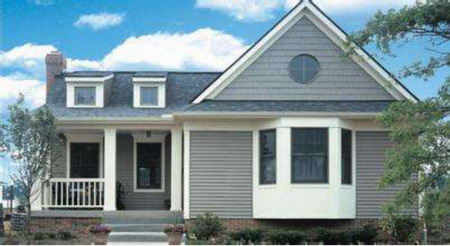
I. Fiber Cement Exterior Wall Panels
Fiber cement exterior wall panels are among the most mature and widely adopted materials in the steel structure housing industry. Their core advantages include excellent fire resistance, stable corrosion resistance, and outstanding weather durability. These panels can withstand long-term exposure to harsh outdoor environments without suffering significant damage from rain, moisture, or humidity, making them highly compatible with the fireproofing and anti-corrosion requirements of steel structure buildings. Their overall cost-performance ratio is highly competitive, leading to extensive use in mid- to high-end steel structure residential projects.
However, the material also has several notable limitations. Due to its inherent material properties, fiber cement panels are relatively heavy and thicker than many alternative cladding systems. During installation, additional internal support framing is typically required to ensure wall stability and surface flatness. In addition, the exterior surface usually requires protective coating treatments for finishing purposes. As a result, the overall installation process is comparatively complex and demands a higher level of on-site construction precision.
II. Metal Exterior Wall Panels
Metal exterior wall panels are integrated composite cladding materials that combine insulation and decorative functions into a single system. Their standard structure typically consists of an outer decorative metal sheet, a middle polyurethane foam insulation layer, and an inner aluminum foil protective layer.
These panels provide multiple performance benefits, including corrosion resistance, thermal insulation, sound insulation, wind resistance, and waterproofing. With comprehensive overall performance, they are widely used in high-end steel structure residences, prefabricated housing projects, and low-rise modular buildings, and have become a popular choice in overseas modern residential developments.
On the downside, metal exterior wall panels are significantly more expensive than conventional exterior wall materials. In addition, their installation process requires highly standardized and precision-oriented construction methods that must strictly follow professional installation specifications. This places greater demands on the technical expertise of the construction team, resulting in higher installation costs and stricter project execution requirements. Consequently, these systems are better suited for projects with sufficient budgets and higher expectations for energy efficiency and architectural appearance.
III. Stone Exterior Wall Panels
Natural stone exterior wall panels are widely recognized as environmentally friendly building materials that combine strong practicality with premium decorative appeal. They fully satisfy the core performance requirements of steel structure residential building s.
Natural stone offers a rich texture, premium visual appearance, high hardness, excellent wind pressure resistance, and strong aging resistance, significantly enhancing the overall architectural quality and prestige of a building. For this reason, stone cladding is commonly used in luxury steel structure residences, large public buildings, and landmark architectural projects.
Nevertheless, the limitations of this material significantly restrict its large-scale adoption. On one hand, certain types of natural stone may contain trace amounts of radiation, which could pose potential health concerns under prolonged close exposure. On the other hand, natural stone is a non-renewable resource with limited availability, high procurement costs, and substantial transportation and installation losses. As a result, the total construction cost remains extremely high. From a cost-performance perspective, stone cladding is generally suitable only for premium customized building projects.
IV. PVC Exterior Wall Panels
PVC exterior wall panels are highly popular environmentally friendly cladding materials widely used in overseas prefabricated steel structure housing. Manufactured primarily from rigid polyvinyl chloride (PVC), these panels integrate exterior wall coverage, structural protection, and architectural decoration into a single system.
Compared with traditional building materials, their greatest advantages lie in sustainability and environmental performance. The raw materials are recyclable and reusable, while both the manufacturing and installation processes generate minimal pollution and consume relatively low energy. This aligns closely with global trends toward green and low-carbon construction.
From a construction perspective, PVC exterior wall panels offer exceptional adaptability and can be seamlessly integrated with various steel structure wall system s. The installation process requires no wet trades and is largely unaffected by weather conditions, enabling all-weather construction and significantly shortening project timelines. The finished panel surfaces are smooth and dense, eliminating the need for additional painting or coating treatments, thereby substantially reducing both construction costs and long-term maintenance expenses.
In addition, PVC panels offer excellent long-term stability. They are resistant to cracking, bulging, and detachment over time, while also maintaining strong moisture resistance and dimensional stability. Changes in temperature and humidity do not easily cause deformation. Routine cleaning generally requires only water washing, making long-term maintenance simple and cost-effective. These characteristics make PVC panels an ideal solution for lightweight and economical steel structure residential building s.
Professional Expertise Creates High-Quality Projects — Comprehensive EPC Services Empower Steel Structure Residential Construction
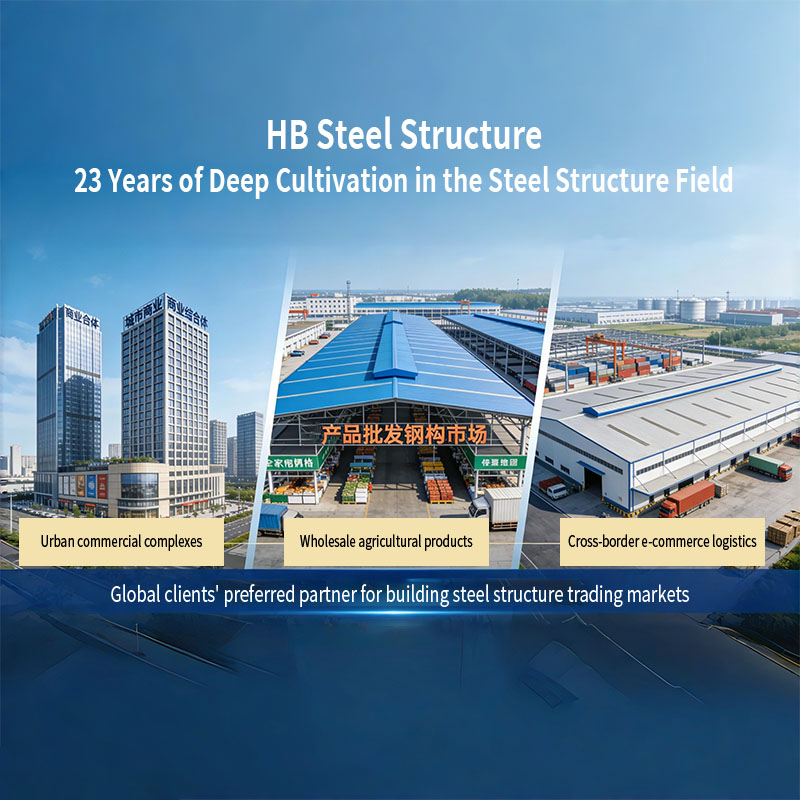
As an experienced steel structure general contractor, Huabang Steel Structure has specialized in the steel construction industry for more than two decades since its establishment in 2003. The company consistently adheres to its operational philosophy of “serving owners, serving projects, and serving business development,” while implementing its core management principles of “brand-focused corporate management, quality-focused project execution, and integrity-focused workforce development.”
Over the years, the company has established a mature management system characterized by standardization, systematic execution, and refined operational control. Supported by a highly skilled technical team and an experienced project management team, Huabang Steel Structure has built a solid technical and managerial foundation for delivering high-quality steel structure projects across multiple sectors.
Leveraging its comprehensive industrial service capabilities, Huabang Steel Structure provides full-process EPC turnkey services covering project planning, detailed engineering design, construction execution, and after-sales maintenance. Its business portfolio spans a wide range of building applications, including steel structure residential building s, industrial plants, commercial retail buildings, and large-span public venues.
Over the years, the company has successfully delivered hundreds of benchmark projects. Through strict material selection standards, advanced construction techniques, and full lifecycle quality control systems, Huabang Steel Structure continues to meet the diverse construction needs of domestic and international clients. With reliable project quality and an efficient, customer-oriented service system, the company has earned strong recognition and an excellent reputation among clients worldwide, continuously contributing to the high-quality and sustainable development of prefabricated steel structure construction.
Unlike traditional concrete construction, steel structure buildings place far higher demands on fire resistance and corrosion protection for their primary structural components. As a result, the exterior wall materials used in steel structure residences must meet stricter overall performance standards.
In addition to essential requirements such as fire resistance, corrosion protection, deformation resistance, and structural flexibility, exterior wall system s for steel structure housing must also support efficient installation, energy efficiency, environmental sustainability, compatibility with prefabricated construction methods, and long-term weather resistance. Drawing on practical application experience from steel structure residential projects both domestically and internationally, this article provides a detailed analysis of four of the most widely used exterior cladding materials in modern steel structure housing projects worldwide, including their performance characteristics, application scenarios, advantages, and limitations, offering professional guidance for material selection in prefabricated steel structure residential construction.
I. Fiber Cement Exterior Wall Panels
Fiber cement exterior wall panels are among the most mature and widely adopted materials in the steel structure housing industry. Their core advantages include excellent fire resistance, stable corrosion resistance, and outstanding weather durability. These panels can withstand long-term exposure to harsh outdoor environments without suffering significant damage from rain, moisture, or humidity, making them highly compatible with the fireproofing and anti-corrosion requirements of steel structure buildings. Their overall cost-performance ratio is highly competitive, leading to extensive use in mid- to high-end steel structure residential projects.
However, the material also has several notable limitations. Due to its inherent material properties, fiber cement panels are relatively heavy and thicker than many alternative cladding systems. During installation, additional internal support framing is typically required to ensure wall stability and surface flatness. In addition, the exterior surface usually requires protective coating treatments for finishing purposes. As a result, the overall installation process is comparatively complex and demands a higher level of on-site construction precision.
II. Metal Exterior Wall Panels
Metal exterior wall panels are integrated composite cladding materials that combine insulation and decorative functions into a single system. Their standard structure typically consists of an outer decorative metal sheet, a middle polyurethane foam insulation layer, and an inner aluminum foil protective layer.
These panels provide multiple performance benefits, including corrosion resistance, thermal insulation, sound insulation, wind resistance, and waterproofing. With comprehensive overall performance, they are widely used in high-end steel structure residences, prefabricated housing projects, and low-rise modular buildings, and have become a popular choice in overseas modern residential developments.
On the downside, metal exterior wall panels are significantly more expensive than conventional exterior wall materials. In addition, their installation process requires highly standardized and precision-oriented construction methods that must strictly follow professional installation specifications. This places greater demands on the technical expertise of the construction team, resulting in higher installation costs and stricter project execution requirements. Consequently, these systems are better suited for projects with sufficient budgets and higher expectations for energy efficiency and architectural appearance.
III. Stone Exterior Wall Panels
Natural stone exterior wall panels are widely recognized as environmentally friendly building materials that combine strong practicality with premium decorative appeal. They fully satisfy the core performance requirements of steel structure residential building s.
Natural stone offers a rich texture, premium visual appearance, high hardness, excellent wind pressure resistance, and strong aging resistance, significantly enhancing the overall architectural quality and prestige of a building. For this reason, stone cladding is commonly used in luxury steel structure residences, large public buildings, and landmark architectural projects.
Nevertheless, the limitations of this material significantly restrict its large-scale adoption. On one hand, certain types of natural stone may contain trace amounts of radiation, which could pose potential health concerns under prolonged close exposure. On the other hand, natural stone is a non-renewable resource with limited availability, high procurement costs, and substantial transportation and installation losses. As a result, the total construction cost remains extremely high. From a cost-performance perspective, stone cladding is generally suitable only for premium customized building projects.
IV. PVC Exterior Wall Panels
PVC exterior wall panels are highly popular environmentally friendly cladding materials widely used in overseas prefabricated steel structure housing. Manufactured primarily from rigid polyvinyl chloride (PVC), these panels integrate exterior wall coverage, structural protection, and architectural decoration into a single system.
Compared with traditional building materials, their greatest advantages lie in sustainability and environmental performance. The raw materials are recyclable and reusable, while both the manufacturing and installation processes generate minimal pollution and consume relatively low energy. This aligns closely with global trends toward green and low-carbon construction.
From a construction perspective, PVC exterior wall panels offer exceptional adaptability and can be seamlessly integrated with various steel structure wall system s. The installation process requires no wet trades and is largely unaffected by weather conditions, enabling all-weather construction and significantly shortening project timelines. The finished panel surfaces are smooth and dense, eliminating the need for additional painting or coating treatments, thereby substantially reducing both construction costs and long-term maintenance expenses.
In addition, PVC panels offer excellent long-term stability. They are resistant to cracking, bulging, and detachment over time, while also maintaining strong moisture resistance and dimensional stability. Changes in temperature and humidity do not easily cause deformation. Routine cleaning generally requires only water washing, making long-term maintenance simple and cost-effective. These characteristics make PVC panels an ideal solution for lightweight and economical steel structure residential building s.
Professional Expertise Creates High-Quality Projects — Comprehensive EPC Services Empower Steel Structure Residential Construction
As an experienced steel structure general contractor, Huabang Steel Structure has specialized in the steel construction industry for more than two decades since its establishment in 2003. The company consistently adheres to its operational philosophy of “serving owners, serving projects, and serving business development,” while implementing its core management principles of “brand-focused corporate management, quality-focused project execution, and integrity-focused workforce development.”
Over the years, the company has established a mature management system characterized by standardization, systematic execution, and refined operational control. Supported by a highly skilled technical team and an experienced project management team, Huabang Steel Structure has built a solid technical and managerial foundation for delivering high-quality steel structure projects across multiple sectors.
Leveraging its comprehensive industrial service capabilities, Huabang Steel Structure provides full-process EPC turnkey services covering project planning, detailed engineering design, construction execution, and after-sales maintenance. Its business portfolio spans a wide range of building applications, including steel structure residential building s, industrial plants, commercial retail buildings, and large-span public venues.
Over the years, the company has successfully delivered hundreds of benchmark projects. Through strict material selection standards, advanced construction techniques, and full lifecycle quality control systems, Huabang Steel Structure continues to meet the diverse construction needs of domestic and international clients. With reliable project quality and an efficient, customer-oriented service system, the company has earned strong recognition and an excellent reputation among clients worldwide, continuously contributing to the high-quality and sustainable development of prefabricated steel structure construction.
Related News
- Steel Member Fabrication and Quality Control Standards
- Steel Structure Container Houses : Leading a New Trend in Global Prefabricated Construction
- Building a Strong Foundation for Steel Structure Manufacturing Plant Development
- Steel Structure Concert Hall: Long-Term Construction Advantages for Premium Performing Arts Venues
- Waterproof System for Steel Structure Buildings: Building a Durable Defense Against Water Damage
- Steel Structure Factory Building Column Base Design: Building a Strong Foundation for Industrial Structures
Leave me a message