
 English
-
English
-
 Español
-
 Português
-
 Русский
-
 Français
-
 日本語
日本語
-
 Deutsch
-
 Tiếng Việt
-
 Italiano
-
 Nederlands
-
 ไทย
ไทย
-
 Polski
-
 한국어
한국어
-
 Svenska
-
 Magyar
-
 Bahasa Melayu
-
 বাংলা
বাংলা
-
 Dansk
Dansk
-
 Suomi
Suomi
-
 हिन्दी
-
 Filipino
-
 Türkçe
-
 Gaeilge
-
 العربية
-
 Bahasa Indonesia
-
 Norsk
Norsk
-
 اردو
اردو
-
 Čeština
-
 Ελληνικά
-
 Українська
-
 Basa Jawa
-
 فارسی
فارسی
-
 தமிழ்
தமிழ்
-
 తెలుగు
-
 नेपाली
-
 မြန်မာ
-
 Български
-
 ລາວ
ລາວ
-
 Latina
-
 Қазақша
-
 Euskera
-
 Azərbaycan
-
 Slovenčina
-
 Македонски
-
 Lietuvių
-
 Eesti
Eesti
-
 Română
-
 Slovenščina

Preferred Structural Systems for Steel Structure Supermarkets
Against the backdrop of rapidly evolving global commercial construction, supermarkets, hypermarkets, and retail complexes are placing greater demands on construction speed, spatial flexibility, and cost efficiency. With its unique advantages, steel construction has become the preferred solution for modern retail spaces. The selection of an appropriate structural system directly impacts operational efficiency and future adaptability throughout the building’s lifecycle.
As a professional company with 23 years of experience in steel structure fabrication and construction, we rely on a mature management system, an experienced project management team, and strong technical expertise to deliver more than 100 large-scale steel structure projects worldwide. Based on our practical experience, this article introduces four mainstream structural systems widely used in steel structure supermarket s, providing valuable reference for overseas industry professionals and investors.
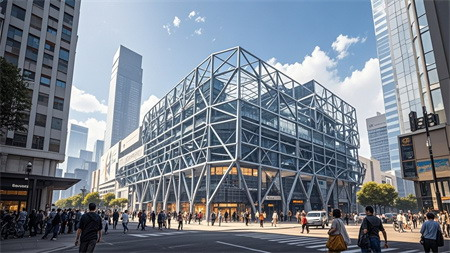
I. Large-Span Portal Frame Structure — The Most Cost-Effective Solution for Single-Story Retail Buildings
For single-story steel structure supermarket s, the large-span portal frame system is the most economical and efficient solution. This system utilizes tapered H-shaped steel beams and columns connected by high-strength bolts to form rigid portal frame units. Standard column spacing typically ranges from 8 to 12 meters, allowing clear spans exceeding 40 meters with ease. Such column-free spaces perfectly meet the core requirements of supermarkets for open visibility, flexible shelving layouts, and unobstructed customer circulation.
The roof system combines lightweight purlins with skylight panels, ensuring structural strength while maximizing natural daylight to create a bright and comfortable shopping environment. With lower steel consumption and rapid construction speed, this solution is particularly suitable for warehouse-style supermarkets and discount retail stores.
II. Multi-Story Steel Frame Structure — The Ideal Choice for Vertical Commercial Development
When supermarkets expand vertically, such as in 2- to 4-story commercial centers or urban retail complexes, multi-story steel frame systems demonstrate exceptional adaptability. This structural system consists of H-shaped or box steel columns and steel beams forming a spatial load-bearing framework, while composite metal deck floor systems provide excellent load capacity and seismic performance.
The flexible column grid arrangement allows for the easy integration of escalators, atriums, multi-level retail units, and open display areas. Compared with reinforced concrete structures, steel frame buildings are lighter in weight, require lower foundation costs, and can reduce construction schedules by approximately 30%–40%, offering steel structure supermarket s superior spatial efficiency and operational flexibility.
III. Efficient Mezzanine Structures — Maximizing Space Utilization and Commercial Value
To maximize the utilization efficiency of steel structure supermarket s, mezzanine floors are often added in areas with sufficient floor height, such as entrance halls and back-of-house zones. Using I-shaped steel main beams combined with metal deck flooring systems, mezzanine structures can be rapidly constructed for storage areas, offices, staff lounges, or specialty retail spaces.
This “space optimization” approach significantly improves sales productivity per unit area while offering outstanding flexibility for future modifications. When retail formats or operational needs change, mezzanine structures can be dismantled, relocated, or expanded without extensive civil construction work. For renovation and expansion projects involving existing supermarkets, mezzanine systems are often one of the most cost-effective solutions available.
IV. Modular Construction Technology — The Future of Agile Retail Development
Some next-generation steel structure supermarket s have already begun adopting modular construction methods. Standardized steel-framed functional modules — such as fast-food areas, refrigerated fresh-food sections, restrooms, and storage units — are precisely manufactured in factories with interior finishes and equipment fully integrated before being transported to the site for rapid assembly.
This construction model significantly shortens on-site construction time, minimizes disruption to surrounding commercial operations, and ensures higher precision and quality consistency. For projects requiring rapid opening schedules, phased development, or strict noise-control measures in urban renewal environments, modular steel construction represents the future direction of agile supermarket development.
Choosing the Right Structural System to Unlock Commercial Potential
From large-span single-story portal frame systems to multi-story steel frames, mezzanine expansions, and modular integration solutions, each structural system offers unique advantages for specific applications. The optimal choice should be based on site conditions, commercial planning objectives, project budget, and development timeline.
With three decades of deep expertise in the steel structure industry, we look forward to partnering with clients worldwide to create more efficient, flexible, and sustainable commercial spaces.
As a professional company with 23 years of experience in steel structure fabrication and construction, we rely on a mature management system, an experienced project management team, and strong technical expertise to deliver more than 100 large-scale steel structure projects worldwide. Based on our practical experience, this article introduces four mainstream structural systems widely used in steel structure supermarket s, providing valuable reference for overseas industry professionals and investors.
I. Large-Span Portal Frame Structure — The Most Cost-Effective Solution for Single-Story Retail Buildings
For single-story steel structure supermarket s, the large-span portal frame system is the most economical and efficient solution. This system utilizes tapered H-shaped steel beams and columns connected by high-strength bolts to form rigid portal frame units. Standard column spacing typically ranges from 8 to 12 meters, allowing clear spans exceeding 40 meters with ease. Such column-free spaces perfectly meet the core requirements of supermarkets for open visibility, flexible shelving layouts, and unobstructed customer circulation.
The roof system combines lightweight purlins with skylight panels, ensuring structural strength while maximizing natural daylight to create a bright and comfortable shopping environment. With lower steel consumption and rapid construction speed, this solution is particularly suitable for warehouse-style supermarkets and discount retail stores.
II. Multi-Story Steel Frame Structure — The Ideal Choice for Vertical Commercial Development
When supermarkets expand vertically, such as in 2- to 4-story commercial centers or urban retail complexes, multi-story steel frame systems demonstrate exceptional adaptability. This structural system consists of H-shaped or box steel columns and steel beams forming a spatial load-bearing framework, while composite metal deck floor systems provide excellent load capacity and seismic performance.
The flexible column grid arrangement allows for the easy integration of escalators, atriums, multi-level retail units, and open display areas. Compared with reinforced concrete structures, steel frame buildings are lighter in weight, require lower foundation costs, and can reduce construction schedules by approximately 30%–40%, offering steel structure supermarket s superior spatial efficiency and operational flexibility.
III. Efficient Mezzanine Structures — Maximizing Space Utilization and Commercial Value
To maximize the utilization efficiency of steel structure supermarket s, mezzanine floors are often added in areas with sufficient floor height, such as entrance halls and back-of-house zones. Using I-shaped steel main beams combined with metal deck flooring systems, mezzanine structures can be rapidly constructed for storage areas, offices, staff lounges, or specialty retail spaces.
This “space optimization” approach significantly improves sales productivity per unit area while offering outstanding flexibility for future modifications. When retail formats or operational needs change, mezzanine structures can be dismantled, relocated, or expanded without extensive civil construction work. For renovation and expansion projects involving existing supermarkets, mezzanine systems are often one of the most cost-effective solutions available.
IV. Modular Construction Technology — The Future of Agile Retail Development
Some next-generation steel structure supermarket s have already begun adopting modular construction methods. Standardized steel-framed functional modules — such as fast-food areas, refrigerated fresh-food sections, restrooms, and storage units — are precisely manufactured in factories with interior finishes and equipment fully integrated before being transported to the site for rapid assembly.
This construction model significantly shortens on-site construction time, minimizes disruption to surrounding commercial operations, and ensures higher precision and quality consistency. For projects requiring rapid opening schedules, phased development, or strict noise-control measures in urban renewal environments, modular steel construction represents the future direction of agile supermarket development.
Choosing the Right Structural System to Unlock Commercial Potential
From large-span single-story portal frame systems to multi-story steel frames, mezzanine expansions, and modular integration solutions, each structural system offers unique advantages for specific applications. The optimal choice should be based on site conditions, commercial planning objectives, project budget, and development timeline.
With three decades of deep expertise in the steel structure industry, we look forward to partnering with clients worldwide to create more efficient, flexible, and sustainable commercial spaces.
Related News
- Steel Member Fabrication and Quality Control Standards
- Steel Structure Container Houses : Leading a New Trend in Global Prefabricated Construction
- Building a Strong Foundation for Steel Structure Manufacturing Plant Development
- Steel Structure Concert Hall: Long-Term Construction Advantages for Premium Performing Arts Venues
- Waterproof System for Steel Structure Buildings: Building a Durable Defense Against Water Damage
- Steel Structure Factory Building Column Base Design: Building a Strong Foundation for Industrial Structures


Leave me a message