
 English
-
English
-
 Español
-
 Português
-
 Русский
-
 Français
-
 日本語
日本語
-
 Deutsch
-
 Tiếng Việt
-
 Italiano
-
 Nederlands
-
 ไทย
ไทย
-
 Polski
-
 한국어
한국어
-
 Svenska
-
 Magyar
-
 Bahasa Melayu
-
 বাংলা
বাংলা
-
 Dansk
Dansk
-
 Suomi
Suomi
-
 हिन्दी
-
 Filipino
-
 Türkçe
-
 Gaeilge
-
 العربية
-
 Bahasa Indonesia
-
 Norsk
Norsk
-
 اردو
اردو
-
 Čeština
-
 Ελληνικά
-
 Українська
-
 Basa Jawa
-
 فارسی
فارسی
-
 தமிழ்
தமிழ்
-
 తెలుగు
-
 नेपाली
-
 မြန်မာ
-
 Български
-
 ລາວ
ລາວ
-
 Latina
-
 Қазақша
-
 Euskera
-
 Azərbaycan
-
 Slovenčina
-
 Македонски
-
 Lietuvių
-
 Eesti
Eesti
-
 Română
-
 Slovenščina

Key Considerations for Modern Steel Structure Cold Storage Construction
With the rapid growth of the fresh food trade, cold chain logistics, pharmaceutical warehousing, and food processing industries, professional cold storage facilities have become an essential component of global supply chain infrastructure. Compared with conventional industrial buildings, cold storage facilities are specialized low-temperature structures that must meet far more demanding requirements for structural stability, airtight insulation performance, moisture control, thermal bridge prevention, and resistance to low-temperature corrosion.
Thanks to their lightweight nature, long-span capabilities, fast construction speed, and flexible space utilization, steel structures have become the preferred structural solution for modern cold storage projects. They are widely used in large-scale multi-temperature warehouses, blast freezers, refrigerated storage facilities, and other temperature-controlled environments.
Since its establishment in 2003, HB Steel Structure has specialized in the design, fabrication, and integrated construction of specialized steel structure buildings for over 23 years. Our expertise covers industrial plants, cold storage facilities, logistics centers, and other specialized building types. Unlike conventional steel structure projects, we develop customized construction solutions specifically for low-temperature environments. By considering regional climate conditions, local cold storage regulations, and client-specific storage requirements, we optimize structural connections and building envelope systems to ensure long-term performance. Drawing on extensive project experience, this article explores the key construction principles and design considerations behind a Steel Structure Cold Storage facility.
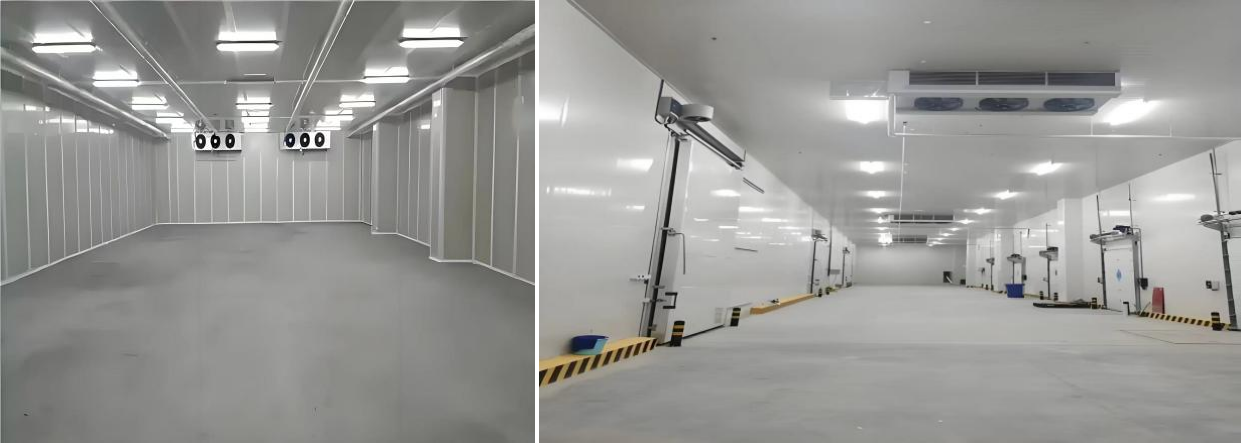
I. Advantages of Steel Structure Cold Storage
Traditional concrete cold storage facilities are often limited by lengthy construction schedules and structural span constraints, making them less suitable for the evolving demands of modern cold chain operations.
A Steel Structure Cold Storage facility offers several significant advantages. Structural components are prefabricated in a factory environment and assembled rapidly on site, substantially reducing project timelines. Long-span, column-free designs create open and highly functional interior spaces that facilitate efficient racking layouts and automated material handling operations.
In addition, steel structures provide exceptional flexibility for future expansion. Storage areas can be modified, enlarged, or reconfigured as operational requirements evolve, helping businesses reduce initial capital investment while maintaining long-term adaptability.
II. Key Design Considerations for the Primary Structure
Low-temperature environments can directly affect the mechanical properties of steel, making material selection a critical aspect of cold storage design.
Structural steel with excellent low-temperature toughness and resistance to brittle fracture should be prioritized to minimize the risk of material failure under freezing conditions. Particular attention must also be given to connection design. Critical structural components, including beam-to-column joints and bracing systems, should be engineered to accommodate thermal movement and maintain structural integrity in low-temperature environments.
Comprehensive load calculations are equally important. In addition to standard dead loads and environmental loads such as wind and snow, designers must account for the weight of insulation systems, refrigeration equipment, stored goods, and potential snow accumulation on the roof to ensure long-term structural reliability.
III. Thermal Bridge Prevention and Enhanced Insulation Design
Thermal bridging is one of the most significant challenges in the design of a Steel Structure Cold Storage facility.
Because steel is highly conductive, heat can easily transfer through structural components, resulting in condensation, frost formation, ice accumulation, and accelerated corrosion. These issues not only increase energy consumption but can also reduce the service life of the building.
To address this challenge, thermal break systems should be incorporated at critical structural connections to interrupt heat transfer pathways. Insulated spacer components can be installed between conductive elements to improve thermal performance.
Walls, roofs, and floors should be equipped with high-density, fire-resistant insulation panels. All panel joints should be carefully sealed and waterproofed to minimize air leakage, maintain stable internal temperatures, and improve overall energy efficiency.
IV. Building Envelope and Corrosion Protection Systems
The combination of low temperatures and high humidity inside cold storage facilities creates conditions that can accelerate corrosion of steel components.
For this reason, all exposed steel member s and internal structural elements should be protected with specialized anti-corrosion coating systems. Following standardized surface preparation through abrasive blasting, steel surfaces should receive primers and topcoats specifically formulated for low-temperature environments.
In areas with elevated humidity levels, hot-dip galvanizing or additional protective coatings may be applied to provide enhanced resistance against moisture-related corrosion.
For the building envelope, polyurethane insulated sandwich panels are often the preferred solution. These panels offer excellent thermal insulation, fire resistance, and moisture protection, making them suitable for facilities operating across a wide temperature range, from approximately -30°C to ambient conditions.
V. Integrated Planning of Supporting Systems
A high-performance Steel Structure Cold Storage facility is not simply a structural project; it is the result of the coordinated integration of structural, insulation, ventilation, and refrigeration systems.
During the design phase, refrigeration equipment locations, drainage systems, and pressure-relief pathways should be planned simultaneously to ensure efficient operation and avoid issues such as ice blockage within drainage networks.
Potential weak points, including doors, windows, and ventilation openings, should be equipped with specialized insulated sealing systems to minimize unwanted air exchange between indoor and outdoor environments. Attention to these details is essential for maintaining overall airtightness and operational efficiency.
Comprehensive Design Integration for High-Performance Cold Chain Facilities
In summary, the construction of a Steel Structure Cold Storage facility differs significantly from that of a conventional industrial building. Successful projects must balance structural engineering requirements with low-temperature material performance, thermal insulation, corrosion protection, and thermal bridge mitigation. As a result, both design and construction demand a high level of technical expertise.
Drawing on decades of experience in specialized steel structure projects across international markets, HB Steel Structure provides comprehensive services ranging from customized project planning and detailed structural engineering to professional steel component manufacturing. We deliver tailored solutions that address the unique challenges of low-temperature facilities, helping clients worldwide build energy-efficient, low-maintenance, and high-safety cold storage facilities for the modern cold chain industry.
Thanks to their lightweight nature, long-span capabilities, fast construction speed, and flexible space utilization, steel structures have become the preferred structural solution for modern cold storage projects. They are widely used in large-scale multi-temperature warehouses, blast freezers, refrigerated storage facilities, and other temperature-controlled environments.
Since its establishment in 2003, HB Steel Structure has specialized in the design, fabrication, and integrated construction of specialized steel structure buildings for over 23 years. Our expertise covers industrial plants, cold storage facilities, logistics centers, and other specialized building types. Unlike conventional steel structure projects, we develop customized construction solutions specifically for low-temperature environments. By considering regional climate conditions, local cold storage regulations, and client-specific storage requirements, we optimize structural connections and building envelope systems to ensure long-term performance. Drawing on extensive project experience, this article explores the key construction principles and design considerations behind a Steel Structure Cold Storage facility.
I. Advantages of Steel Structure Cold Storage
Traditional concrete cold storage facilities are often limited by lengthy construction schedules and structural span constraints, making them less suitable for the evolving demands of modern cold chain operations.
A Steel Structure Cold Storage facility offers several significant advantages. Structural components are prefabricated in a factory environment and assembled rapidly on site, substantially reducing project timelines. Long-span, column-free designs create open and highly functional interior spaces that facilitate efficient racking layouts and automated material handling operations.
In addition, steel structures provide exceptional flexibility for future expansion. Storage areas can be modified, enlarged, or reconfigured as operational requirements evolve, helping businesses reduce initial capital investment while maintaining long-term adaptability.
II. Key Design Considerations for the Primary Structure
Low-temperature environments can directly affect the mechanical properties of steel, making material selection a critical aspect of cold storage design.
Structural steel with excellent low-temperature toughness and resistance to brittle fracture should be prioritized to minimize the risk of material failure under freezing conditions. Particular attention must also be given to connection design. Critical structural components, including beam-to-column joints and bracing systems, should be engineered to accommodate thermal movement and maintain structural integrity in low-temperature environments.
Comprehensive load calculations are equally important. In addition to standard dead loads and environmental loads such as wind and snow, designers must account for the weight of insulation systems, refrigeration equipment, stored goods, and potential snow accumulation on the roof to ensure long-term structural reliability.
III. Thermal Bridge Prevention and Enhanced Insulation Design
Thermal bridging is one of the most significant challenges in the design of a Steel Structure Cold Storage facility.
Because steel is highly conductive, heat can easily transfer through structural components, resulting in condensation, frost formation, ice accumulation, and accelerated corrosion. These issues not only increase energy consumption but can also reduce the service life of the building.
To address this challenge, thermal break systems should be incorporated at critical structural connections to interrupt heat transfer pathways. Insulated spacer components can be installed between conductive elements to improve thermal performance.
Walls, roofs, and floors should be equipped with high-density, fire-resistant insulation panels. All panel joints should be carefully sealed and waterproofed to minimize air leakage, maintain stable internal temperatures, and improve overall energy efficiency.
IV. Building Envelope and Corrosion Protection Systems
The combination of low temperatures and high humidity inside cold storage facilities creates conditions that can accelerate corrosion of steel components.
For this reason, all exposed steel member s and internal structural elements should be protected with specialized anti-corrosion coating systems. Following standardized surface preparation through abrasive blasting, steel surfaces should receive primers and topcoats specifically formulated for low-temperature environments.
In areas with elevated humidity levels, hot-dip galvanizing or additional protective coatings may be applied to provide enhanced resistance against moisture-related corrosion.
For the building envelope, polyurethane insulated sandwich panels are often the preferred solution. These panels offer excellent thermal insulation, fire resistance, and moisture protection, making them suitable for facilities operating across a wide temperature range, from approximately -30°C to ambient conditions.
V. Integrated Planning of Supporting Systems
A high-performance Steel Structure Cold Storage facility is not simply a structural project; it is the result of the coordinated integration of structural, insulation, ventilation, and refrigeration systems.
During the design phase, refrigeration equipment locations, drainage systems, and pressure-relief pathways should be planned simultaneously to ensure efficient operation and avoid issues such as ice blockage within drainage networks.
Potential weak points, including doors, windows, and ventilation openings, should be equipped with specialized insulated sealing systems to minimize unwanted air exchange between indoor and outdoor environments. Attention to these details is essential for maintaining overall airtightness and operational efficiency.
Comprehensive Design Integration for High-Performance Cold Chain Facilities
In summary, the construction of a Steel Structure Cold Storage facility differs significantly from that of a conventional industrial building. Successful projects must balance structural engineering requirements with low-temperature material performance, thermal insulation, corrosion protection, and thermal bridge mitigation. As a result, both design and construction demand a high level of technical expertise.
Drawing on decades of experience in specialized steel structure projects across international markets, HB Steel Structure provides comprehensive services ranging from customized project planning and detailed structural engineering to professional steel component manufacturing. We deliver tailored solutions that address the unique challenges of low-temperature facilities, helping clients worldwide build energy-efficient, low-maintenance, and high-safety cold storage facilities for the modern cold chain industry.
Related News
- How to Choose the Right Containment System?
- Seismic Response and Design Considerations for Steel Structure Residential Buildings
- Core Advantages of a Steel Structure Logistics Center
- What Are the Key Advantages of a Steel Structure Multi-story Residential Building?
- Protective Methods for Steel Members
- How to Optimize Ventilation Systems in a Steel Structure Residential Building
Leave me a message