
 English
-
English
-
 Español
-
 Português
-
 Русский
-
 Français
-
 日本語
日本語
-
 Deutsch
-
 Tiếng Việt
-
 Italiano
-
 Nederlands
-
 ไทย
ไทย
-
 Polski
-
 한국어
한국어
-
 Svenska
-
 Magyar
-
 Bahasa Melayu
-
 বাংলা
বাংলা
-
 Dansk
Dansk
-
 Suomi
Suomi
-
 हिन्दी
-
 Filipino
-
 Türkçe
-
 Gaeilge
-
 العربية
-
 Bahasa Indonesia
-
 Norsk
Norsk
-
 اردو
اردو
-
 Čeština
-
 Ελληνικά
-
 Українська
-
 Basa Jawa
-
 فارسی
فارسی
-
 தமிழ்
தமிழ்
-
 తెలుగు
-
 नेपाली
-
 မြန်မာ
-
 Български
-
 ລາວ
ລາວ
-
 Latina
-
 Қазақша
-
 Euskera
-
 Azərbaycan
-
 Slovenčina
-
 Македонски
-
 Lietuvių
-
 Eesti
Eesti
-
 Română
-
 Slovenščina

Technical Requirements for Steel Structure Venue Layout Planning
In the field of large-scale public buildings worldwide, steel structures have become the preferred structural solution for stadiums, exhibition centers, and performing arts venues due to their ability to achieve long spans, lightweight construction, and highly flexible spatial configurations. Compared with conventional buildings, a Steel Structure Venue typically accommodates larger interior spaces, higher occupant loads, and more complex structural systems, placing greater demands on the scientific planning, functionality, and safety of its layout.
Drawing on international venue construction standards and extensive experience in overseas projects, HB Steel Structure has summarized the key technical principles governing Steel Structure Venue layout planning from four critical perspectives: structural performance, operational functionality, life safety, and long-term durability. These guidelines provide a valuable technical reference for the standardized development of Steel Structure Venue projects worldwide.
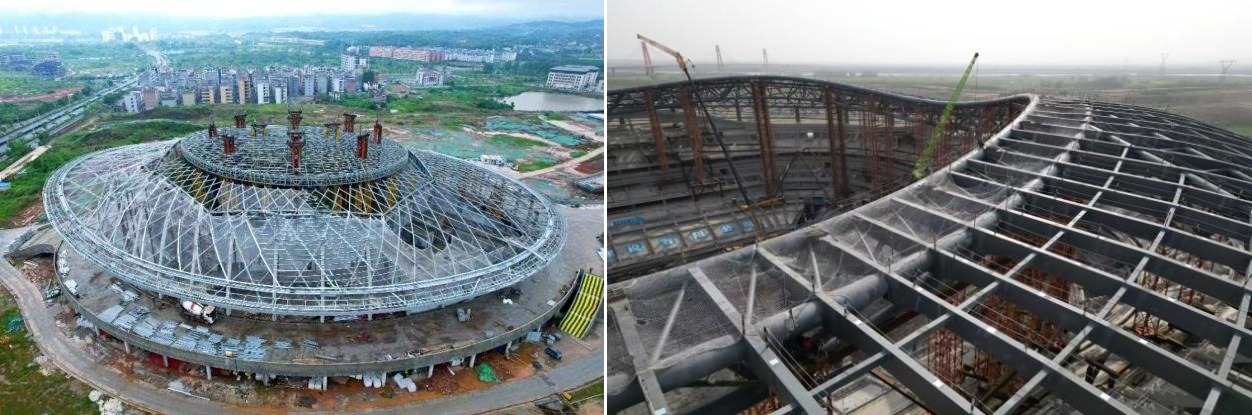
I. Standardized Structural Grid Layout for Optimal Space Utilization and Load Distribution
One of the primary advantages of a Steel Structure Venue is its ability to provide large, unobstructed interior spaces. To ensure overall structural stability and balanced load distribution, the structural grid should adopt regular rectangular or geometrically consistent layouts, avoiding irregular column arrangements that may introduce unfavorable structural behavior.
During the design phase, the column layout should be coordinated with the load-bearing characteristics of roof space frames, tubular trusses, and other long-span structural systems. Structural columns should be arranged along the building perimeter and major axes of symmetry whenever possible, allowing the center of mass and the center of rigidity to align more closely. This approach helps minimize torsional effects caused by wind loads and dynamic forces while enhancing the overall wind and seismic resistance of the venue.
In seating areas, event spaces, and other key functional zones, sufficient space should be reserved for mechanical, electrical, and plumbing systems during the planning stage. This prevents the need for later modifications such as drilling or cutting structural members, thereby preserving the integrity and load-bearing capacity of the steel structure.
II. Efficient Functional Zoning and Circulation Planning
Modern Steel Structure Venue design places significant emphasis on operational efficiency, user experience, and effective crowd management. The layout should clearly define independent functional zones while ensuring efficient circulation throughout the facility.
Primary areas such as spectator spaces, event zones, operational support facilities, and building services should be carefully separated according to their functions. A commonly adopted planning strategy positions public gathering and circulation areas around the building perimeter, while locating competition venues, performance areas, or exhibition halls within the central core.
Circulation routes for spectators, athletes, performers, staff, logistics personnel, and service operations should be separated through horizontal or vertical zoning strategies. This minimizes pedestrian conflicts, reduces congestion, and supports the safe movement of large numbers of occupants during major events and exhibitions.
Where large openings are required for fire access routes, loading docks, or service entrances, additional roof bracing and inter-column support systems should be incorporated to compensate for localized reductions in structural stiffness. This ensures that loads remain evenly distributed throughout the structure and that overall stability is maintained.
III. Dedicated Fire Safety and Emergency Egress Planning for Large-Span Venues
The large-span and open-space characteristics of a Steel Structure Venue require specialized fire protection and evacuation strategies that differ significantly from those used in conventional buildings.
During the design process, occupant capacity and venue configuration must be carefully evaluated to determine appropriate evacuation distances and exit capacities. Spectator seating areas should be equipped with clearly organized longitudinal and transverse egress routes, while exit widths should be designed to accommodate peak occupancy conditions and facilitate rapid evacuation during emergencies.
In addition, fire protection strategies should account for smoke movement patterns associated with atriums, high-volume spaces, and open interior environments. Fire-resistant coatings should be applied to exposed steel member s in accordance with project-specific fire engineering requirements, ensuring comprehensive protection of structural components exposed to elevated temperatures.
These measures significantly enhance the overall fire safety performance of the venue and support compliance with international public building safety standards.
IV. Detailed Coordination of Building Interfaces for Long-Term Performance
The layout planning of a Steel Structure Venue should not only facilitate efficient construction but also support long-term maintenance and operational reliability.
When designing wall enclosure systems, careful consideration should be given to the relationship between walls and structural columns. Wherever possible, wall assemblies should avoid interfering with the strong-axis orientation of steel columns, or alternatively incorporate recessed detailing that conceals structural elements while maintaining architectural aesthetics and structural protection.
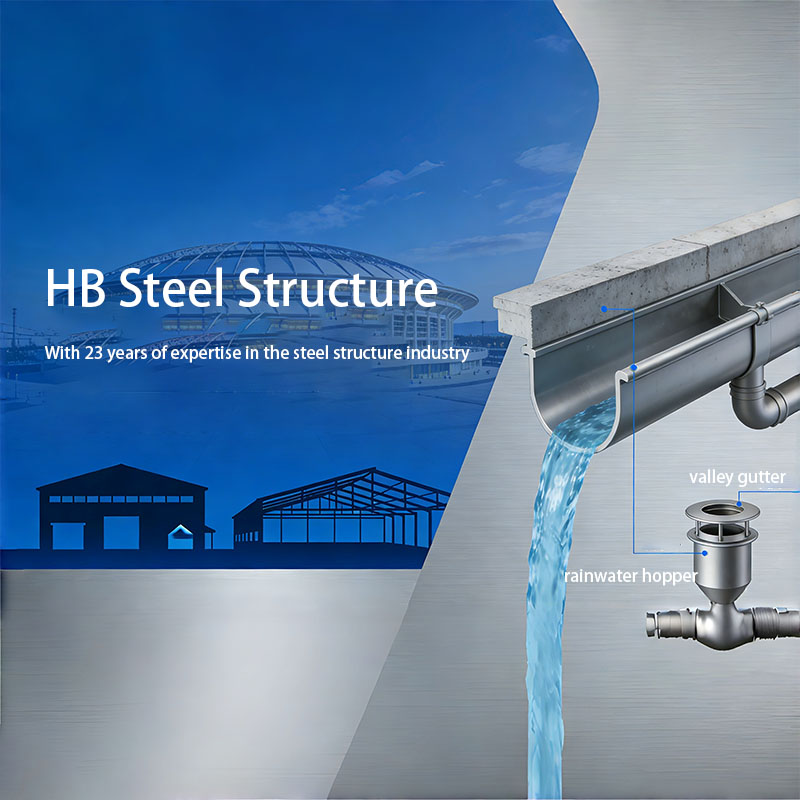
At the initial design stage, roof drainage strategies should be fully integrated into the layout plan. Roof slopes, gutter locations, and drainage pathways should be carefully coordinated to ensure efficient water management and prevent ponding. Proper drainage design helps eliminate long-term moisture accumulation that could accelerate corrosion of roof structural components, thereby extending the service life of the entire facility.
Integrated Layout Planning Creates High-Quality Steel Structure Venue s
The layout planning of a Steel Structure Venue is a comprehensive engineering process involving the coordination of structural grids, functional circulation, life-safety systems, and building enclosure details. By following these technical principles, project teams can enhance structural safety, improve operational efficiency, and maximize long-term durability.
HB Steel Structure possesses extensive experience in the design and construction of Steel Structure Venue projects. We provide comprehensive services ranging from layout optimization and structural engineering to component fabrication and on-site installation, helping clients worldwide develop safe, efficient, and durable venue facilities that meet the highest international standards.
Drawing on international venue construction standards and extensive experience in overseas projects, HB Steel Structure has summarized the key technical principles governing Steel Structure Venue layout planning from four critical perspectives: structural performance, operational functionality, life safety, and long-term durability. These guidelines provide a valuable technical reference for the standardized development of Steel Structure Venue projects worldwide.
I. Standardized Structural Grid Layout for Optimal Space Utilization and Load Distribution
One of the primary advantages of a Steel Structure Venue is its ability to provide large, unobstructed interior spaces. To ensure overall structural stability and balanced load distribution, the structural grid should adopt regular rectangular or geometrically consistent layouts, avoiding irregular column arrangements that may introduce unfavorable structural behavior.
During the design phase, the column layout should be coordinated with the load-bearing characteristics of roof space frames, tubular trusses, and other long-span structural systems. Structural columns should be arranged along the building perimeter and major axes of symmetry whenever possible, allowing the center of mass and the center of rigidity to align more closely. This approach helps minimize torsional effects caused by wind loads and dynamic forces while enhancing the overall wind and seismic resistance of the venue.
In seating areas, event spaces, and other key functional zones, sufficient space should be reserved for mechanical, electrical, and plumbing systems during the planning stage. This prevents the need for later modifications such as drilling or cutting structural members, thereby preserving the integrity and load-bearing capacity of the steel structure.
II. Efficient Functional Zoning and Circulation Planning
Modern Steel Structure Venue design places significant emphasis on operational efficiency, user experience, and effective crowd management. The layout should clearly define independent functional zones while ensuring efficient circulation throughout the facility.
Primary areas such as spectator spaces, event zones, operational support facilities, and building services should be carefully separated according to their functions. A commonly adopted planning strategy positions public gathering and circulation areas around the building perimeter, while locating competition venues, performance areas, or exhibition halls within the central core.
Circulation routes for spectators, athletes, performers, staff, logistics personnel, and service operations should be separated through horizontal or vertical zoning strategies. This minimizes pedestrian conflicts, reduces congestion, and supports the safe movement of large numbers of occupants during major events and exhibitions.
Where large openings are required for fire access routes, loading docks, or service entrances, additional roof bracing and inter-column support systems should be incorporated to compensate for localized reductions in structural stiffness. This ensures that loads remain evenly distributed throughout the structure and that overall stability is maintained.
III. Dedicated Fire Safety and Emergency Egress Planning for Large-Span Venues
The large-span and open-space characteristics of a Steel Structure Venue require specialized fire protection and evacuation strategies that differ significantly from those used in conventional buildings.
During the design process, occupant capacity and venue configuration must be carefully evaluated to determine appropriate evacuation distances and exit capacities. Spectator seating areas should be equipped with clearly organized longitudinal and transverse egress routes, while exit widths should be designed to accommodate peak occupancy conditions and facilitate rapid evacuation during emergencies.
In addition, fire protection strategies should account for smoke movement patterns associated with atriums, high-volume spaces, and open interior environments. Fire-resistant coatings should be applied to exposed steel member s in accordance with project-specific fire engineering requirements, ensuring comprehensive protection of structural components exposed to elevated temperatures.
These measures significantly enhance the overall fire safety performance of the venue and support compliance with international public building safety standards.
IV. Detailed Coordination of Building Interfaces for Long-Term Performance
The layout planning of a Steel Structure Venue should not only facilitate efficient construction but also support long-term maintenance and operational reliability.
When designing wall enclosure systems, careful consideration should be given to the relationship between walls and structural columns. Wherever possible, wall assemblies should avoid interfering with the strong-axis orientation of steel columns, or alternatively incorporate recessed detailing that conceals structural elements while maintaining architectural aesthetics and structural protection.
At the initial design stage, roof drainage strategies should be fully integrated into the layout plan. Roof slopes, gutter locations, and drainage pathways should be carefully coordinated to ensure efficient water management and prevent ponding. Proper drainage design helps eliminate long-term moisture accumulation that could accelerate corrosion of roof structural components, thereby extending the service life of the entire facility.
Integrated Layout Planning Creates High-Quality Steel Structure Venue s
The layout planning of a Steel Structure Venue is a comprehensive engineering process involving the coordination of structural grids, functional circulation, life-safety systems, and building enclosure details. By following these technical principles, project teams can enhance structural safety, improve operational efficiency, and maximize long-term durability.
HB Steel Structure possesses extensive experience in the design and construction of Steel Structure Venue projects. We provide comprehensive services ranging from layout optimization and structural engineering to component fabrication and on-site installation, helping clients worldwide develop safe, efficient, and durable venue facilities that meet the highest international standards.
Related News
- Steel Structure Coal Storage Shed: A Modern Solution for Green Industrial Storage
- How to Choose the Right Containment System?
- Seismic Response and Design Considerations for Steel Structure Residential Buildings
- Core Advantages of a Steel Structure Logistics Center
- What Are the Key Advantages of a Steel Structure Multi-story Residential Building?
- Protective Methods for Steel Members
Leave me a message