
 English
-
English
-
 Español
-
 Português
-
 Русский
-
 Français
-
 日本語
日本語
-
 Deutsch
-
 Tiếng Việt
-
 Italiano
-
 Nederlands
-
 ไทย
ไทย
-
 Polski
-
 한국어
한국어
-
 Svenska
-
 Magyar
-
 Bahasa Melayu
-
 বাংলা
বাংলা
-
 Dansk
Dansk
-
 Suomi
Suomi
-
 हिन्दी
-
 Filipino
-
 Türkçe
-
 Gaeilge
-
 العربية
-
 Bahasa Indonesia
-
 Norsk
Norsk
-
 اردو
اردو
-
 Čeština
-
 Ελληνικά
-
 Українська
-
 Basa Jawa
-
 فارسی
فارسی
-
 தமிழ்
தமிழ்
-
 తెలుగు
-
 नेपाली
-
 မြန်မာ
-
 Български
-
 ລາວ
ລາວ
-
 Latina
-
 Қазақша
-
 Euskera
-
 Azərbaycan
-
 Slovenčina
-
 Македонски
-
 Lietuvių
-
 Eesti
Eesti
-
 Română
-
 Slovenščina

Understanding the Standardized Production Process of Steel Structure Residential Buildings
As the global construction industry continues to shift toward green, low-carbon, and industrialized building methods, steel structure residential building s have emerged as a mainstream solution for modern housing development. Offering advantages such as environmental sustainability, shorter construction periods, superior structural safety, and efficient space utilization, steel structure housing is transforming traditional residential construction practices worldwide.A standardized, refined, and systematic production process is the key to ensuring consistent product quality, structural performance, cost control, and installation efficiency.
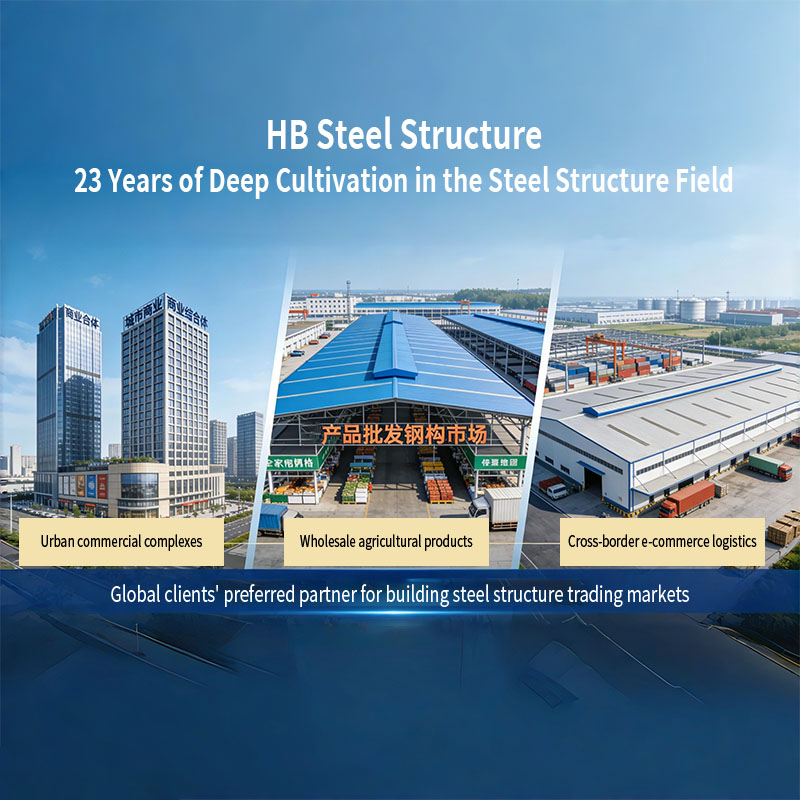
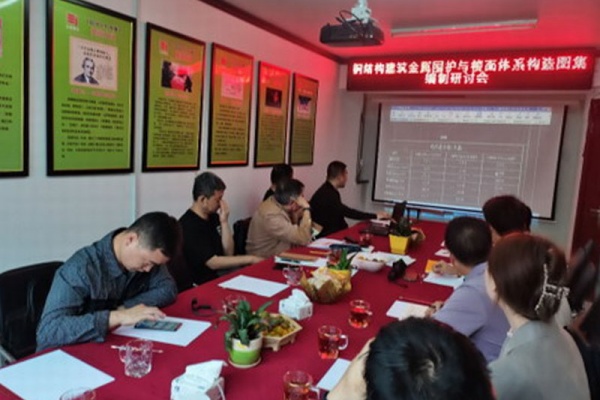
Since its establishment in 2003, HB Steel Structure Engineering Co., Ltd. has specialized in steel structure research, manufacturing, and engineering construction. Guided by the core philosophy of “Serving Owners, Serving Projects, and Serving Business Development,” and adhering to the management principles of “Brand-Oriented Company, Quality-Focused Projects, and Integrity-Driven Employees,” we provide comprehensive steel structure solutions for residential developments and construction investors worldwide. Backed by a mature management system, experienced project teams, and highly skilled technical professionals, we deliver end-to-end services ranging from detailed design and component manufacturing to customized fabrication and on-site assembly.This article explores the complete standardized production process of steel structure residential building s.

1. Modular Design and BIM-Based Detailing: Building a Strong Foundation
Quality control for steel structure housing begins at the design stage.Using original architectural drawings and structural schemes, project teams employ Building Information Modeling (BIM) technology to conduct multidisciplinary collaborative design and detailing. Through 3D modeling, engineers refine component drawings, coordinate embedded utility systems, optimize connection nodes, and integrate enclosure systems to identify and eliminate potential design conflicts before manufacturing and installation begin.At the same time, modular and standardized design principles are implemented to unify component specifications and establish standardized module compatibility. This approach enables large-scale production, efficient assembly, and cross-regional application while significantly improving overall manufacturing efficiency.
2. Premium Material Selection and Intelligent Cutting: Ensuring Structural Reliability
High-quality raw materials form the foundation of a safe and durable steel structure residence.At HB Steel Structure Engineering Co., Ltd., all incoming steel materials and auxiliary components undergo strict qualification reviews and sampling inspections to ensure compliance with international construction standards. Only certified materials are approved for production.After passing inspection, materials enter the intelligent cutting stage. Advanced CNC cutting equipment accurately performs plate cutting and segmentation according to digitally programmed specifications. With millimeter-level precision, the process ensures dimensional consistency and seamless compatibility among structural components, laying a solid foundation for subsequent assembly and welding operations.
3. Automated Assembly and Precision Welding: Enhancing Structural Stability
Once cutting is completed, individual parts are transferred to dedicated assembly stations where automated equipment, supported by skilled technicians, precisely assembles them into standardized residential components such as wall modules, floor trusses, and load-bearing steel columns.Welding is one of the most critical stages in steel structure manufacturing, directly affecting the overall safety and integrity of the building.Modern production lines commonly utilize advanced submerged arc welding (SAW) and gas shielded welding technologies. Compared with conventional manual welding methods, these automated processes provide more uniform weld seams, greater consistency, and enhanced reliability.Following welding, comprehensive non-destructive testing (NDT) is conducted to detect potential defects and verify that all welded joints meet industry safety and quality requirements.
4. Deformation Correction and Integrated Processing: Improving Installation Efficiency
Thermal deformation can occur during welding operations. To maintain dimensional accuracy, specialized straightening equipment is used to correct distortions and restore components to their required specifications.After correction, CNC drilling machines accurately create bolt holes, ensuring fast alignment and efficient installation during on-site assembly.In addition, modern production facilities support integrated prefabrication processes. Features such as door and window openings, utility penetrations, and internal mounting accessories can be pre-installed at the factory. This significantly reduces on-site construction work and shortens the overall project timeline.
5. Corrosion Protection, Fireproofing, and Comprehensive Quality Inspection
To withstand diverse environmental conditions and extend building service life, all steel structure components undergo professional surface treatment.After shot blasting and rust removal, high-performance anti-corrosion coatings and fire-resistant protective coatings are applied in multiple layers. These treatments enhance resistance to corrosion, aging, and fire exposure, ensuring long-term structural durability.Upon completion of all manufacturing processes, quality inspectors conduct comprehensive factory acceptance inspections covering:
Dimensional accuracy
Welding quality
Coating thickness
Assembly compatibility
Surface finish
Accessory installation
Qualified components are then assigned identification codes, categorized, securely packaged, and prepared for transportation to construction sites for rapid assembly and installation.
Precision Manufacturing Drives High-Quality Prefabricated Housing Development
Standardized production encompasses every stage of a steel structure residential project—from design and material selection to fabrication, coating, and final quality inspection. It represents the defining difference between traditional labor-intensive construction and modern industrialized building methods.A well-structured production system helps reduce construction errors, lower project costs, improve structural safety, enhance durability, and deliver superior living comfort.Looking ahead, HB Steel Structure Engineering Co., Ltd. will continue to optimize manufacturing technologies and upgrade intelligent production systems. Through high-quality products and professional services, we remain committed to helping clients worldwide develop modern, sustainable, and high-performance prefabricated steel structure residential building s.
Since its establishment in 2003, HB Steel Structure Engineering Co., Ltd. has specialized in steel structure research, manufacturing, and engineering construction. Guided by the core philosophy of “Serving Owners, Serving Projects, and Serving Business Development,” and adhering to the management principles of “Brand-Oriented Company, Quality-Focused Projects, and Integrity-Driven Employees,” we provide comprehensive steel structure solutions for residential developments and construction investors worldwide. Backed by a mature management system, experienced project teams, and highly skilled technical professionals, we deliver end-to-end services ranging from detailed design and component manufacturing to customized fabrication and on-site assembly.This article explores the complete standardized production process of steel structure residential building s.
1. Modular Design and BIM-Based Detailing: Building a Strong Foundation
Quality control for steel structure housing begins at the design stage.Using original architectural drawings and structural schemes, project teams employ Building Information Modeling (BIM) technology to conduct multidisciplinary collaborative design and detailing. Through 3D modeling, engineers refine component drawings, coordinate embedded utility systems, optimize connection nodes, and integrate enclosure systems to identify and eliminate potential design conflicts before manufacturing and installation begin.At the same time, modular and standardized design principles are implemented to unify component specifications and establish standardized module compatibility. This approach enables large-scale production, efficient assembly, and cross-regional application while significantly improving overall manufacturing efficiency.
2. Premium Material Selection and Intelligent Cutting: Ensuring Structural Reliability
High-quality raw materials form the foundation of a safe and durable steel structure residence.At HB Steel Structure Engineering Co., Ltd., all incoming steel materials and auxiliary components undergo strict qualification reviews and sampling inspections to ensure compliance with international construction standards. Only certified materials are approved for production.After passing inspection, materials enter the intelligent cutting stage. Advanced CNC cutting equipment accurately performs plate cutting and segmentation according to digitally programmed specifications. With millimeter-level precision, the process ensures dimensional consistency and seamless compatibility among structural components, laying a solid foundation for subsequent assembly and welding operations.
3. Automated Assembly and Precision Welding: Enhancing Structural Stability
Once cutting is completed, individual parts are transferred to dedicated assembly stations where automated equipment, supported by skilled technicians, precisely assembles them into standardized residential components such as wall modules, floor trusses, and load-bearing steel columns.Welding is one of the most critical stages in steel structure manufacturing, directly affecting the overall safety and integrity of the building.Modern production lines commonly utilize advanced submerged arc welding (SAW) and gas shielded welding technologies. Compared with conventional manual welding methods, these automated processes provide more uniform weld seams, greater consistency, and enhanced reliability.Following welding, comprehensive non-destructive testing (NDT) is conducted to detect potential defects and verify that all welded joints meet industry safety and quality requirements.
4. Deformation Correction and Integrated Processing: Improving Installation Efficiency
Thermal deformation can occur during welding operations. To maintain dimensional accuracy, specialized straightening equipment is used to correct distortions and restore components to their required specifications.After correction, CNC drilling machines accurately create bolt holes, ensuring fast alignment and efficient installation during on-site assembly.In addition, modern production facilities support integrated prefabrication processes. Features such as door and window openings, utility penetrations, and internal mounting accessories can be pre-installed at the factory. This significantly reduces on-site construction work and shortens the overall project timeline.
5. Corrosion Protection, Fireproofing, and Comprehensive Quality Inspection
To withstand diverse environmental conditions and extend building service life, all steel structure components undergo professional surface treatment.After shot blasting and rust removal, high-performance anti-corrosion coatings and fire-resistant protective coatings are applied in multiple layers. These treatments enhance resistance to corrosion, aging, and fire exposure, ensuring long-term structural durability.Upon completion of all manufacturing processes, quality inspectors conduct comprehensive factory acceptance inspections covering:
Dimensional accuracy
Welding quality
Coating thickness
Assembly compatibility
Surface finish
Accessory installation
Qualified components are then assigned identification codes, categorized, securely packaged, and prepared for transportation to construction sites for rapid assembly and installation.
Precision Manufacturing Drives High-Quality Prefabricated Housing Development
Standardized production encompasses every stage of a steel structure residential project—from design and material selection to fabrication, coating, and final quality inspection. It represents the defining difference between traditional labor-intensive construction and modern industrialized building methods.A well-structured production system helps reduce construction errors, lower project costs, improve structural safety, enhance durability, and deliver superior living comfort.Looking ahead, HB Steel Structure Engineering Co., Ltd. will continue to optimize manufacturing technologies and upgrade intelligent production systems. Through high-quality products and professional services, we remain committed to helping clients worldwide develop modern, sustainable, and high-performance prefabricated steel structure residential building s.
Related News
- How to Choose the Right Containment System?
- Seismic Response and Design Considerations for Steel Structure Residential Buildings
- Core Advantages of a Steel Structure Logistics Center
- What Are the Key Advantages of a Steel Structure Multi-story Residential Building?
- Protective Methods for Steel Members
- Key Considerations for Modern Steel Structure Cold Storage Construction
Leave me a message